
General Statistics
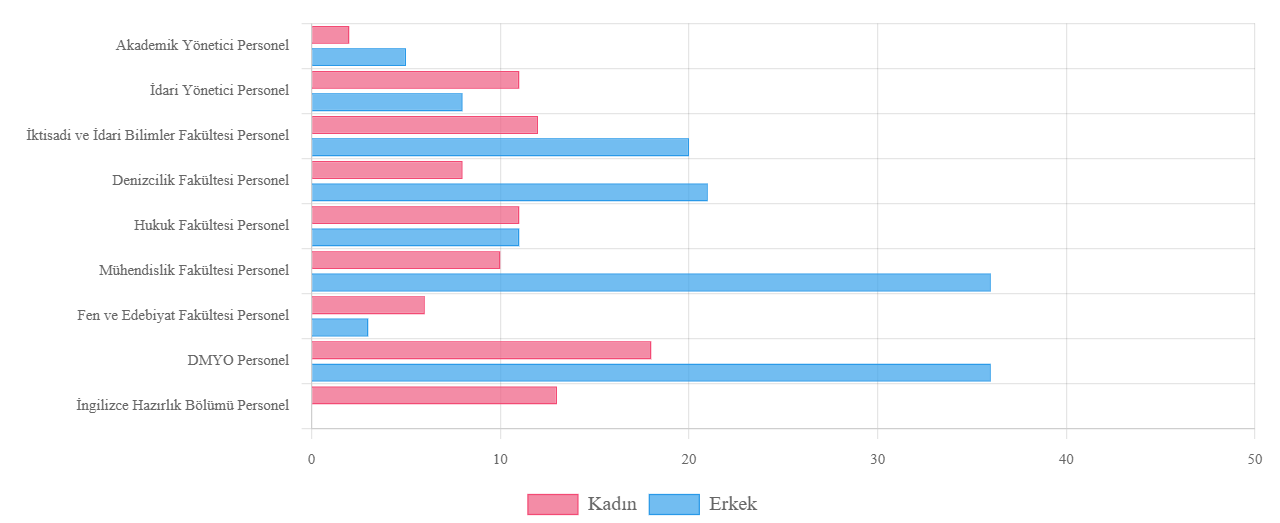
This report presents data compiled to assess the status of gender equality at our university. Gender equality is of critical importance in terms of both academic success and social harmony. The data includes important indicators such as the ratio of female and male students, faculty members and administrators, and will help assess the extent to which the principle of equality has been achieved.
In recent years, our university has taken important steps in this regard and developed various policies. However, achieving gender equality should not be limited to the analysis of existing data only. A continuous monitoring, evaluation, and improvement process is required. In this context, we should not forget that data is only a starting point and that we must continuously strive to achieve our equality goals.
Anyone who wants to receive more information about the work carried out at our university to support gender equality and to contribute is encouraged to contact the relevant units. Equal opportunities in education is not only an individual but also a social responsibility, and we must all work together to achieve this goal.
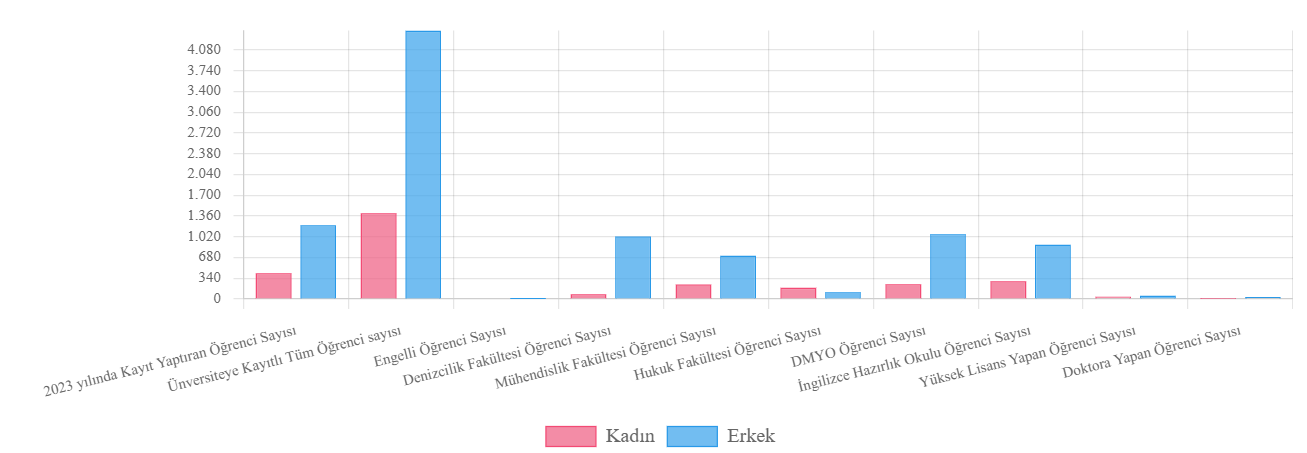
This graph shows the gender distribution of the student population at our university. The data is an important indicator in assessing our gender balance and equality goals. Gender distribution is a reflection of our efforts to ensure diversity and inclusiveness in our educational institutions.
The data in the table indicates the gender ratios in our university. Achieving gender equality in education aims to ensure that all our students have equal opportunities and that each individual maximizes their potential.
Analyzing this data provides a basis for evaluating the effects of equality and diversity policies in our university. It also provides insight into the areas where progress needs to be made towards achieving our gender equality goals.
You can look at this file for detailed information.